Ghost School Pakistani Movie: Cast, Story, Release Updates and Sindh Censorship Controversy Explained
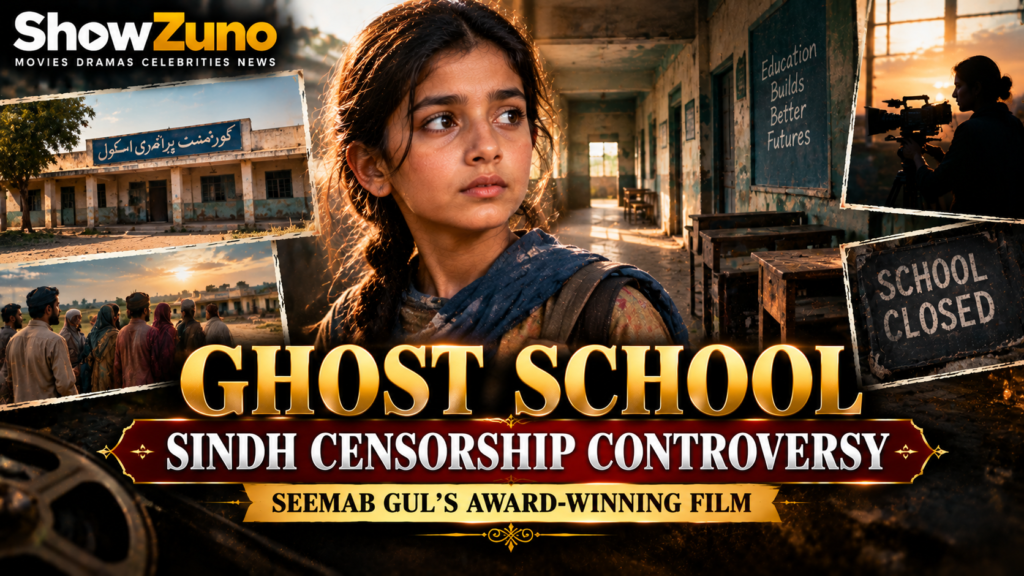
Pakistani filmmaker Seemab Gul’s Ghost School has attracted attention for its story about a young girl searching for answers after the only school in her village closes—and for the legal dispute surrounding its screening in Sindh. The feature film combines a child’s perspective, rural superstition and questions about access to education, turning a seemingly supernatural mystery into a wider social story.
The film became the subject of a legal challenge after the Sindh Board of Film Censors refused to approve it for screening without changes. In October 2026, the Sindh High Court set aside most of the board’s demanded cuts and ordered it to reconsider certification within 10 days, subject to the filmmakers removing one item they had agreed to excise.
With the film’s Pakistan release announced for October 30, 2026, Ghost School is now being discussed not only as an internationally screened Pakistani feature, but also as a case involving artistic expression, film regulation and the importance of girls’ education. Availability in individual cinemas, particularly in Sindh, should be checked against current local listings.
Ghost School Movie: Quick Details
- Title: Ghost School
- Director and screenwriter: Seemab Gul
- Year: 2025
- Runtime: 88 minutes
- Countries listed: Pakistan, Germany and Saudi Arabia
- Language: Urdu
- Lead character: Rabia, a 10-year-old girl
- Genre: Fiction feature with social-realism and magical-realism elements
- Pakistan release announced: October 30, 2026
- Main controversy: Sindh film certification and proposed cuts
Film-festival listings identify Ghost School as Seemab Gul’s debut feature, with a running time of 88 minutes and an Urdu-language presentation.
What Is the Story of Ghost School?
Ghost School follows Rabia, a curious 10-year-old girl who discovers that the only school in her village has closed. Instead of receiving a clear explanation, she encounters rumours that the building is haunted and that her teacher has been affected by a supernatural presence.
Rabia sets out to discover what has happened. Her search takes her through the surrounding countryside and into conversations with adults who are reluctant or unable to give her straightforward answers. As she continues asking questions, the mystery becomes a way to explore the distance between what children need and what the adults and institutions around them provide.
The supernatural rumours are central to the film’s atmosphere, but the story also points toward real concerns about education, public responsibility and the obstacles facing children in rural communities. The film’s festival synopsis describes Rabia’s journey as a determined effort to uncover the truth behind her school’s closure.
The title refers to the idea of a “ghost school”—a school that exists in the community’s imagination or official records but is not functioning as children expect. In Pakistan, the term is also associated with concerns about non-functional schools and institutions that may exist on paper without providing regular education.
By placing a child at the centre of the story, Gul gives these broader concerns a personal focus. Rabia is not a policymaker or an official; she is a young student who wants to understand why she can no longer attend school.
Ghost School Cast and Characters
Festival listings identify the film’s principal cast and the characters they play. The available credits include:
| Actor | Character |
|---|---|
| Nazualiya Arsalan | Rabia |
| Samina Seher | Rabia’s mother |
| Adnan Shah Tipu | Principal |
| Vajdaan Shah | Horse-cart driver |
| Muhammad Zamaan | Teacher |
| Muhammad Zayan | Ali |
| Kehan Naqvi | Fruit seller |
| Taha Khan | Uncle |
| Ziarat Gul | Security guard |
| Tariq Raja | DC guard |
| Tutu Baba | Wise man |
The cast and character details are listed by the Indian Film Festival of Los Angeles.
Nazualiya Arsalan as Rabia
Rabia is the central character and the driving force behind the story. Her determination to find out why her school has closed pushes the narrative forward.
Rather than accepting the explanations she hears, she keeps searching for answers. Her curiosity gives the film its emotional centre and allows the audience to see the village’s problems from a child’s point of view.
Samina Seher as Rabia’s Mother
Samina Seher plays Rabia’s mother. Her character forms part of the family environment in which Rabia tries to make sense of what is happening around her.
The festival synopsis notes that Rabia’s mother is occupied with her own concerns and cannot immediately answer all her daughter’s questions. This helps establish the loneliness of Rabia’s search and her growing independence.
Adnan Shah Tipu and the Supporting Cast
Adnan Shah Tipu appears as the principal, while Muhammad Zamaan is credited as the teacher. Other performers play villagers and figures Rabia encounters during her journey.
These characters help build the social world of the film. Each encounter provides another piece of the mystery—or reveals how difficult it can be for a child to obtain a clear answer from adults.
Who Directed Ghost School?
Ghost School was written and directed by British-Pakistani filmmaker Seemab Gul. The film is her debut feature and follows her earlier short-film and documentary work. Festival biographies note that her short film Sandstorm premiered at the Venice Film Festival and later screened at Sundance.
The film’s cinematography is credited to Zamarin Wahdat, while Anna Bauer composed the music. Editing credits include Raluca Petre and Alexandra Strauss. Festival listings also identify Seemab Gul, Dorothe Beinemeier and Steffen Gerdes among the producers.
Gul’s approach places a child’s everyday experience at the centre of a story about institutional failure and local beliefs. The village setting and the rumours surrounding the school create an atmosphere of mystery, while Rabia’s search for the truth keeps the film grounded in the practical question of why a school has stopped serving its students.
Ghost School’s International Festival Journey
Before its announced Pakistan release, Ghost School appeared at international film festivals. Its festival history helped introduce the film to audiences outside Pakistan and brought attention to its themes of education, superstition and social responsibility.
The New York International Children’s Film Festival lists the film as an 88-minute live-action feature directed by Seemab Gul, with Urdu dialogue and English subtitles. Its synopsis describes Rabia’s journey across the Pakistani countryside as she tries to understand why her school has closed.
The Indian Film Festival of Los Angeles also listed the film in its 2026 programme, identifying it as a 2025 feature from Pakistan, Germany and Saudi Arabia. Its programme notes emphasise Rabia’s determination and the film’s attention to the effects of neglect on children.
These screenings established the film’s international festival presence. However, festival selection and awards should be distinguished from commercial release information: they do not by themselves confirm where or when the film will be available in Pakistani cinemas.
Why Was Ghost School Caught in a Censorship Dispute?
The dispute centred on the Sindh Board of Film Censors’ decision to require changes before the film could receive a certificate for public exhibition in the province.
According to Dawn, the filmmakers challenged the board’s demand for eight excisions, including expressions used in dialogue and scenes near the film’s closing sequence. The film had reportedly been cleared for unrestricted exhibition by the Central Board of Film Censors and the Punjab Board of Film Censors, but Sindh’s board took a different position.
The filmmakers argued that the proposed cuts were not adequately justified under the applicable legal framework. Their challenge brought the matter before the Sindh High Court, where the court examined whether the censor board had explained why each requested removal was necessary.
The dispute was not simply about whether a film could be shown. It also raised questions about how authorities should assess artistic material, how censorship decisions must be explained and whether restrictions should be limited to what the law requires.
What Did the Sindh High Court Decide?
In October 2026, the Sindh High Court set aside most of the censor board’s demanded cuts and directed it to reconsider the film’s certification within 10 days. The court’s order retained one excision to which the filmmakers had agreed.
The court found that the board had not provided sufficient reasons to justify most of the requested removals. It distinguished between different kinds of expressions and scenes, observing that they could not all be treated as equivalent without explaining the legal basis for each objection.
The court directed the board either to issue a certificate allowing unrestricted public exhibition without further cuts or, if it considered a higher age classification necessary, to provide the filmmakers with a personal hearing and issue a reasoned decision explaining its concerns.
This was a direction to reconsider certification, not a general ruling that film boards can never request edits. The decision focused on the need for a lawful, clearly explained basis for the restrictions in this particular case.
Ghost School Pakistan Release Date: When Can You Watch It?
News reports published on October 23, 2026, said Ghost School was scheduled for release in Pakistan on October 30, 2026. The report also said the film was expected to reach cinemas in Punjab and Sindh, following the legal dispute over its screening in the latter province.
Because the Sindh certification process involved a further decision by the provincial board, viewers should confirm local showtimes before travelling to a cinema. A release announcement does not guarantee that every cinema or province will have screenings at the same time.
At the time of writing, the sources cited here do not confirm a streaming-service release date. Viewers should check the film’s official announcements and recognised distributors for any later digital availability rather than relying on unofficial uploads.
Why Ghost School Matters Beyond Entertainment
The film’s story touches on a subject that extends beyond the screen: the importance of functioning schools and accessible education for children in rural communities.
Rabia’s search begins with a straightforward question—why has her school closed? The answers she encounters reveal a world in which rumour, authority and neglect can prevent a child from receiving clear information or practical help.
The censorship dispute added another dimension to the film’s public discussion. The High Court’s decision highlighted the importance of explaining restrictions on creative work and considering whether proposed cuts are legally justified.
For viewers, Ghost School offers both a child-centred mystery and an opportunity to reflect on the institutions that shape everyday life. Its international festival screenings and planned local release have brought the film’s themes to a wider audience.
Frequently Asked Questions
What is the Pakistani film Ghost School about?
Ghost School follows 10-year-old Rabia, who investigates why the only school in her village has closed after rumours spread that it is haunted.
Who directed Ghost School?
The film was written and directed by British-Pakistani filmmaker Seemab Gul. It is her debut feature.
Who stars in Ghost School?
The cast includes Nazualiya Arsalan as Rabia, Samina Seher as her mother, Adnan Shah Tipu as the principal, and Muhammad Zamaan as the teacher.
Why did Ghost School face a censorship dispute in Sindh?
The Sindh Board of Film Censors demanded several cuts before certification. The filmmakers challenged the decision, and the Sindh High Court set aside most of the demanded cuts and ordered the board to reconsider certification.
When is Ghost School releasing in Pakistan?
Reports published on October 23, 2026, announced an October 30 release. Viewers should check current cinema listings, particularly in Sindh, for confirmed local screenings.
Is Ghost School available on a streaming platform?
The sources cited in this article do not confirm an official streaming release date. Check announcements from the filmmakers or authorised distributors for verified updates.
Conclusion
Ghost School is a Pakistani feature that uses the journey of a 10-year-old girl to explore education, superstition and institutional responsibility. Written and directed by Seemab Gul, the film follows Rabia as she tries to discover why her village school has closed and why the adults around her cannot provide a clear answer.
Its international festival screenings brought attention to its story, while the censorship dispute in Sindh placed questions about artistic expression and film regulation in the spotlight. The Sindh High Court set aside most of the requested cuts and directed the provincial board to reconsider certification.
With a Pakistan release announced for October 30, 2026, the next practical step for viewers is to check current cinema listings and any updated certification announcement. The film’s story remains relevant beyond its mystery: it asks what happens when children seek knowledge but the institutions meant to support them fail to respond.